Lith Corporation, founded in 1998 by a group of material science doctor from Tsinghua University, has now become the leading manufacturer of battery lab&production equipment. Lith Corporation have production factories in shenzhen and xiamen of China.This allows for the possibility of providing high quality and low-cost precision machines for lab&production equipment,including: roller press, film coater,mixer, high-temperature furnace, glove box,and complete set of equipment for research of rechargeable battery materials. Simple to operate, low cost and commitment to our customers is our priority.
CR2032 Case: Overview, Features, Manufacturing Process, Applications, Advantages, and Conclusion
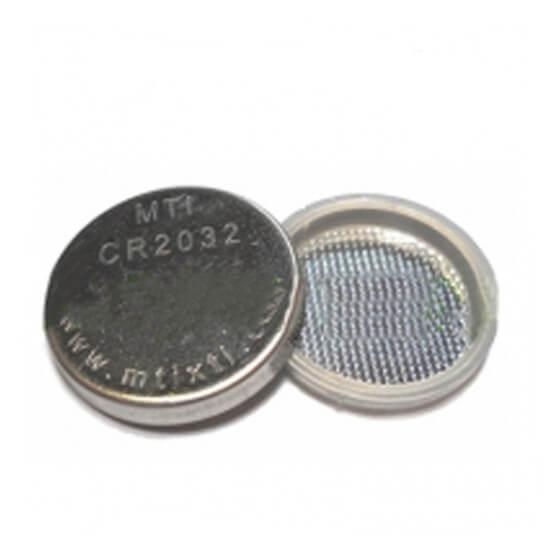
A CR2032 case is a precision-engineered metal housing used to assemble CR2032 coin cells, one of the most widely used battery formats in consumer electronics, research laboratories, and energy-storage development. Although compact in structure, the CR2032 case plays a critical role in ensuring the mechanical stability, electrochemical performance, and long-term reliability of the battery. It is manufactured using high-precision stamping and forming processes, typically with stainless steel or nickel-plated steel, to meet stringent dimensional and performance standards.
Overview
The CR2032 case consists of two primary components: the positive (cathode) case and the negative (anode) case. These two metal shells encapsulate the internal components of the coin cell, including the cathode material, anode material, separator, electrolyte, and sealing gasket. The case ensures that the battery is structurally secure, hermetically sealed, and capable of providing stable electrical contact. As a standardized cell structure, the CR2032 case is essential not only for mass-production of commercial coin cells but also for laboratory assembly of experimental battery chemistries.
Key Features of the CR2032 Case
Modern CR2032 cases exhibit several essential design and performance features:
High Precision Dimensions: Tight tolerances ensure consistent cell thickness, pressure distribution, and internal space for electrode stacking.
Corrosion-Resistant Materials: Typically made of stainless steel or nickel-plated steel to withstand corrosive electrolyte environments.
Strong Mechanical Strength: Provides structural support to maintain internal compression, essential for proper electrochemical performance.
Standardized Design: Compatible with a wide range of coin cell crimping machines and laboratory assembly tools.
Leak-Proof Construction: Works with a sealing gasket (usually PP) to ensure airtight and electrolyte-tight sealing.
Manufacturing Process
The production of a CR2032 case involves several precision mechanical steps:
1.Material Selection: High-grade stainless steel or nickel-plated steel sheets are selected for durability and corrosion resistance.
2.Stamping and Forming: High-speed stamping presses form the raw material into the shape of the positive and negative shells.
3.Trimming and Polishing: Edges are trimmed and surfaces are polished to ensure smoothness and uniform thickness.
4.Cleaning and Degreasing: Cases undergo ultrasonic cleaning to remove residues and contaminants.
5.Quality Inspection: Dimensional checks, hardness tests, and surface inspections ensure the case meets technical standards.
6.Packaging: Cases are packed in contamination-free containers for use in laboratory or industrial battery assembly.
This precise manufacturing process ensures high consistency, which is essential for both research and commercial battery production.
Button Cell Cases
Applications
The CR2032 case is widely used across many fields:
Lithium Coin Cells: Ideal for assembling primary lithium batteries used in watches, IoT devices, calculators, smart keys, and sensors.
Rechargeable Coin Cells: Used in lithium-ion and lithium-metal rechargeable coin cells for R&D applications.
Battery Research Laboratories: Essential for assembling experimental coin cells for material testing, cyclic performance studies, and prototype development.
Sodium-Ion and Potassium-Ion Coin Cells: Increasingly used as a standard format to evaluate emerging energy storage chemistries.
Educational and Training Institutions: Used in teaching battery fundamentals and hands-on assembly.
The standardized CR2032 format makes it invaluable for comparing electrochemical performance across different material systems.
Advantages
Using a CR2032 case offers several key advantages:
Compatibility with Standard Tools: Works seamlessly with common coin cell crimpers, electrode punches, and sealing systems.
Low Cost and High Availability: Widely produced and easily sourced for laboratory use.
Reliable Electrochemical Environment: Ensures stable compression and sealing, which improve cycle life and reproducibility.
Scalable and Repeatable: Ideal for performing controlled, repeatable experiments and accelerated testing.
Versatile Research Use: Supports numerous active materials, electrolytes, and separators for rapid evaluation.
Conclusion
In conclusion, the CR2032 case is an essential mechanical component in both commercial battery manufacturing and laboratory research. Its precise construction, corrosion-resistant materials, and standardized design ensure consistent battery performance, safe operation, and reliable sealing. Whether used for lithium coin cells, next-generation sodium-ion prototypes, or academic research, the CR2032 case remains one of the most important testing formats in the energy-storage industry. With its proven reliability, low cost, and widespread compatibility, the CR2032 case will continue to be a key technology supporting innovation in battery science and manufacturing.


 Online service
