Lith Corporation, founded in 1998 by a group of material science doctor from Tsinghua University, has now become the leading manufacturer of battery lab&production equipment. Lith Corporation have production factories in shenzhen and xiamen of China.This allows for the possibility of providing high quality and low-cost precision machines for lab&production equipment,including: roller press, film coater,mixer, high-temperature furnace, glove box,and complete set of equipment for research of rechargeable battery materials. Simple to operate, low cost and commitment to our customers is our priority.
Blade Coater: A Comprehensive Introduction to Precision Coating Equipment
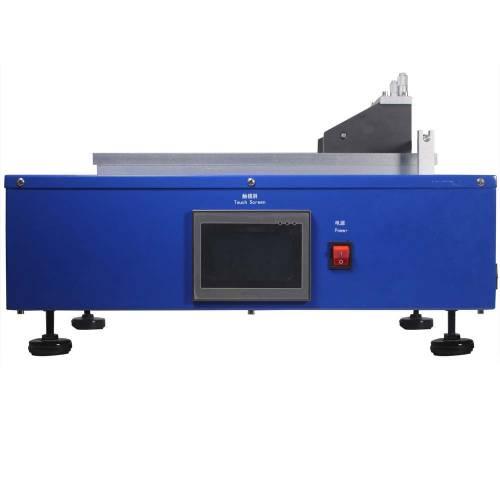
A blade coater is a widely used precision coating device designed to apply uniform thin films of slurry, paste, or liquid solutions onto a variety of substrates. This equipment plays a crucial role in industries that demand highly accurate coating thickness and surface consistency, including battery manufacturing, material science research, functional films, adhesives, and advanced material development. With its adjustable blade gap and controlled coating parameters, the blade coater has become a standard tool for both research laboratories and industrial pilot-scale production.
Overview
The blade coater operates on a simple yet effective principle: a fixed or adjustable blade spreads a pre-metered amount of slurry over the surface of the substrate as it moves underneath. The gap between the blade and substrate determines the wet film thickness, enabling precise control of coating uniformity. This simplicity, combined with precise mechanical design, allows the blade coater to deliver repeatable, high-accuracy coatings across different material systems.
In the field of lithium-ion batteries, blade coating is especially important for fabricating cathode and anode electrodes, where even slight variations in film thickness can affect energy density, internal resistance, and long-term cycling performance. Beyond batteries, the equipment is also essential in polymer films, ceramics, carbon materials, biomaterials, and membrane technology.
Key Features
A modern blade coater integrates several critical features to enhance precision and usability:
1. Adjustable Blade Gap: The blade height can be finely tuned to control film thickness, typically ranging from a few micrometers to several hundred micrometers. This adjustability allows users to tailor coatings for different materials and performance requirements.
2. Stable Coating Bed: A flat, vacuum-suction coating plate ensures the substrate remains firmly fixed during coating, improving uniformity across the entire coated area.
3. Smooth Coating Motion: Many blade coaters are equipped with motorized stages that provide constant and vibration-free movement, allowing highly consistent coating speeds.
4. Compatible with Multiple Substrate Types: The device can coat metal foils, polymer films, glass, ceramics, and flexible substrates—making it adaptable for various experimental and industrial needs.
5. Easy Operation and High Repeatability: The mechanical simplicity of the blade coater ensures reliable performance, making it ideal for process development and material optimization.
Coating Process
The blade coater’s coating process involves several steps to achieve precision and uniformity:
1. Substrate Preparation: The substrate is placed onto the vacuum suction plate to prevent movement or wrinkling during coating.
2. Slurry Application: A measured amount of slurry or solution is dispensed directly in front of the blade.
3. Blade Adjustment: The blade height is set to the desired gap, which determines the target wet thickness.
4. Controlled Motion: The coating head or substrate platform moves at a constant speed, drawing the slurry under the blade to form a uniform film.
5. Drying and Solidification: After coating, the wet film is transferred to a drying oven or hot plate to evaporate solvents and solidify the final coating structure.
The precision of the blade coater allows researchers and manufacturers to carefully tune film characteristics such as porosity, density, and surface morphology.


 Online service
