Lith Corporation, founded in 1998 by a group of material science doctor from Tsinghua University, has now become the leading manufacturer of battery lab&production equipment. Lith Corporation have production factories in shenzhen and xiamen of China.This allows for the possibility of providing high quality and low-cost precision machines for lab&production equipment,including: roller press, film coater,mixer, high-temperature furnace, glove box,and complete set of equipment for research of rechargeable battery materials. Simple to operate, low cost and commitment to our customers is our priority.
Tape Coating Machine: Overview, Features, Process, Applications, Advantages, and Conclusion
Overview
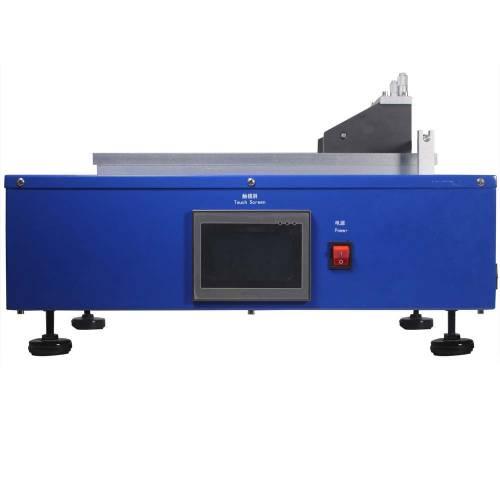
A tape coating machine is a specialized industrial device designed to apply uniform layers of functional materials, adhesives, or slurries onto flexible substrates such as metal foils, polymer films, or nonwoven fabrics. Widely used in battery manufacturing, electronics, packaging, and material science, tape coating machines ensure high precision, consistent film thickness, and reproducible coating quality. By automating the coating process, these machines improve production efficiency and maintain product uniformity, making them essential in both R&D laboratories and largescale industrial production lines.
Key Features of Tape Coating Machines
Modern tape coating machines incorporate multiple features that enhance performance, flexibility, and reliability:
* Adjustable Coating Width and Thickness: Precision control over the coating gap and blade pressure allows accurate wetfilm thickness adjustments.
* Versatile Coating Methods: Supports slotdie, knifeoverroll, or doctor blade techniques depending on material viscosity and application.
* Automated Substrate Handling: Motorized rollers or conveyors maintain consistent substrate tension and alignment.
* Digital Control and Programmable Settings: Modern machines provide programmable speed, coating gap, and substrate feed rate for reproducible results.
* HighQuality Materials: Stainless steel or corrosionresistant components ensure durability and prevent contamination.
* Integrated Drying or Curing Systems: Many machines include infrared, hotair, or UV curing modules for rapid postcoating treatment.
These features make tape coating machines suitable for highprecision applications where consistency and efficiency are critical.
Tape Coating Process
The tape coating process involves several precise steps to ensure uniform coverage:
1. Substrate Preparation: The flexible tape or film is cleaned and tensioned to remove dust, oils, and moisture.
2. Material Application: A controlled volume of liquid, slurry, or adhesive is applied onto the moving substrate.
3. Coating Method Selection: Depending on the material properties, the machine may use a doctor blade, slotdie, or knifeoverroll system to spread the coating evenly.
4. Thickness Adjustment: The coating gap and blade pressure are adjusted to achieve the desired wetfilm thickness.
5. Drying or Curing: The coated tape passes through drying ovens, IR heaters, or UV curing systems to solidify the film.
6. Inspection and Quality Control: The coated tape is examined for uniformity, defects, and thickness accuracy before winding for storage or further processing.
This automated process ensures reproducibility and scalability for both laboratory and industrial production.
DR Blade
Applications
Tape coating machines are widely applied across multiple industries:
* Battery Manufacturing: Coating electrodes or separators with slurries for lithiumion, sodiumion, or solidstate batteries.
* Electronics: Applying dielectric, conductive, or adhesive films on flexible circuits, sensors, and displays.
* Packaging and Labeling: Coating adhesive layers or functional films for industrial packaging applications.
* Optical and Photonic Devices: Producing thin films for lenses, photonic layers, and protective coatings.
* Material Research: Fabricating uniform films of polymers, composites, or nanomaterials for R&D testing.
The versatility of tape coating machines allows them to handle diverse materials and substrate types, making them suitable for both research and industrialscale applications.
Advantages
Using a tape coating machine provides several significant benefits:
* High Precision and Uniformity: Ensures consistent film thickness and quality across the entire substrate.
* Enhanced Production Efficiency: Automation reduces manual labor and increases throughput.
* Scalability: Laboratoryscale experiments can be translated to pilot or industrial production.
* Material Savings: Precise deposition reduces waste of expensive or limited materials.
* Flexibility: Compatible with multiple coating techniques, substrates, and material viscosities.
* Reliable and Durable: Highquality components and automated control minimize defects and maintenance needs.
These advantages make tape coating machines an essential tool for producing highperformance functional coatings.
Conclusion
In conclusion, a tape coating machine is a vital piece of equipment for industries requiring uniform, highquality coatings on flexible substrates. Its precise control over coating thickness, compatibility with multiple materials, and integration with drying or curing systems ensure reproducible results for both R&D and largescale production. Widely used in battery manufacturing, electronics, packaging, and material research, tape coating machines enhance efficiency, reduce waste, and provide consistent, reliable performance. Investing in advanced tape coating equipment is essential for achieving optimal product quality, scalable processes, and high production efficiency in modern industrial applications.


 Online service
