Lith Corporation, founded in 1998 by a group of material science doctor from Tsinghua University, has now become the leading manufacturer of battery lab&production equipment. Lith Corporation have production factories in shenzhen and xiamen of China.This allows for the possibility of providing high quality and low-cost precision machines for lab&production equipment,including: roller press, film coater,mixer, high-temperature furnace, glove box,and complete set of equipment for research of rechargeable battery materials. Simple to operate, low cost and commitment to our customers is our priority.
20mm Battery Holder: Overview, Features, Manufacturing Process, Applications, Advantages, and Conclusion
A 20mm battery holder is a precision-engineered component designed to securely house 20mm coin or button batteries, such as CR2032 cells, in electronic devices, test equipment, and prototype assemblies. These holders provide reliable electrical contact, mechanical stability, and easy replacement of batteries, making them essential in laboratories, small electronics manufacturing, and educational setups. Understanding the design, manufacturing process, and applications of 20mm battery holders is critical for selecting the right component for both R&D and production purposes.
Overview
The 20mm battery holder is typically composed of durable materials such as ABS plastic, polycarbonate, or high-temperature resistant polymers combined with corrosion-resistant metal contacts, often nickel-plated brass or stainless steel. Its compact size allows integration into small devices while maintaining secure retention of the battery and stable electrical connectivity. In addition to standard holders, specialized versions may include snap-fit, solderable, or spring-loaded designs to accommodate automated assembly processes.
Key Features of 20mm Battery Holders
Several characteristics define a high-quality 20mm battery holder:
* Precise Fit: Designed for exact 20mm diameter batteries to prevent rattling or poor contact.
* Reliable Electrical Contacts: Metal contacts provide low-resistance connectivity and long-term reliability.
* Durable Construction: Resistant to mechanical stress, heat, and environmental factors.
* Easy Battery Replacement: Snap-in or spring-loaded mechanisms facilitate quick removal and installation.
* Compatibility with Soldering and PCB Mounting: Some holders support through-hole or surface-mount assembly for automated production.
* Safety Features: Built-in insulation and protection prevent short circuits and accidental contact.
Manufacturing Process
The production of 20mm battery holders involves several precise steps to ensure dimensional accuracy and electrical reliability:
1. Material Selection: Plastic bodies are molded using high-quality polymers, while contacts are formed from corrosion-resistant metal sheets.
2. Injection Molding: The plastic casing is produced through injection molding to achieve accurate dimensions and uniform mechanical strength.
3. Metal Contact Fabrication: Metal contacts are stamped, plated (usually nickel or tin), and formed to precise angles for optimal battery contact.
4. Assembly: Metal contacts are inserted into the plastic casing, either manually or using automated equipment.
5. Quality Inspection: Each holder undergoes electrical continuity tests, dimensional checks, and mechanical stress testing to ensure performance.
6. Packaging: Finished holders are packaged to prevent contamination and damage before shipment.
This manufacturing process ensures that every 20mm battery holder meets industry standards for reliability and safety.
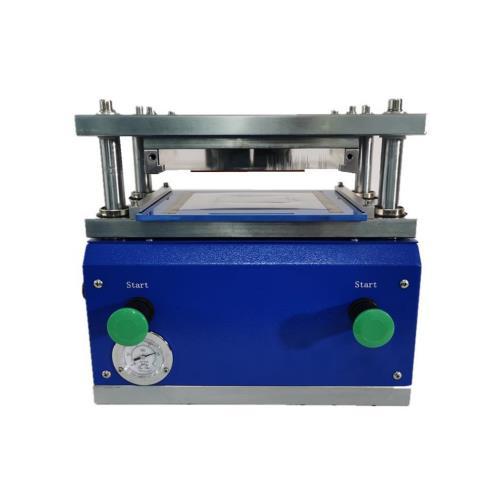
battery die cutting machine
Applications
20mm battery holders are widely used across multiple sectors:
* Consumer Electronics: Watches, calculators, remote controls, LED lights, and small electronic toys.
* Laboratory Testing Equipment: Coin cells mounted for cyclic testing and prototype circuits.
* Battery Prototyping and R&D: Essential in research laboratories for assembling experimental battery configurations.
* Educational Kits: Electronics training kits and DIY projects frequently utilize 20mm battery holders.
* IoT Devices and Sensors: Small-scale IoT modules often rely on compact coin cells mounted in these holders for reliable power supply.
Their versatility allows use in both low-volume prototypes and automated production lines.
Advantages
The use of a high-quality 20mm battery holder offers several benefits:
* Secure Battery Retention: Prevents disconnection during vibration or movement.
* Stable Electrical Performance: Ensures consistent voltage and low-resistance contacts.
* Ease of Replacement: Batteries can be quickly swapped without specialized tools.
* Durable and Long-Lasting: Resistant to wear, corrosion, and repeated insertion cycles.
* Cost-Effective: Offers a simple, reliable solution for integrating coin cells into devices.
* Design Flexibility: Supports a variety of mounting methods for different applications, including PCB integration.
Conclusion
In conclusion, the 20mm battery holder is a critical component for securely housing coin cells in both experimental and production environments. With precise fitting, reliable electrical contacts, durable construction, and compatibility with automated assembly processes, these holders ensure consistent performance, safety, and ease of battery replacement. Their wide range of applications—from consumer electronics to laboratory testing—highlights their versatility and importance in modern electronic design. Investing in high-quality 20mm battery holders enhances device reliability, simplifies maintenance, and supports both small-scale prototypes and large-scale production.


 Online service
