Lith Corporation, founded in 1998 by a group of material science doctor from Tsinghua University, has now become the leading manufacturer of battery lab&production equipment. Lith Corporation have production factories in shenzhen and xiamen of China.This allows for the possibility of providing high quality and low-cost precision machines for lab&production equipment,including: roller press, film coater,mixer, high-temperature furnace, glove box,and complete set of equipment for research of rechargeable battery materials. Simple to operate, low cost and commitment to our customers is our priority.
Extrusion Coater: Overview, Features, Process, Applications, Advantages, and Conclusion
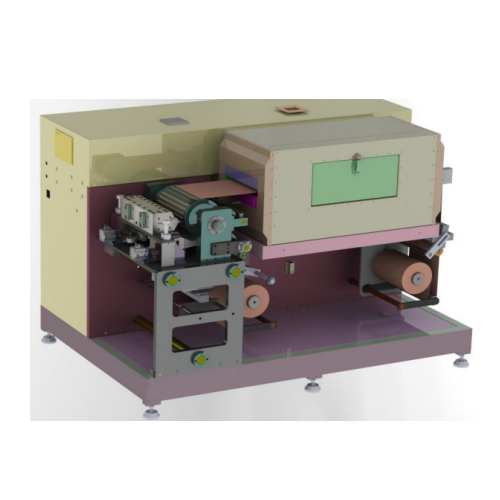
Overview An extrusion coater is a specialized industrial machine designed to apply a uniform layer of liquid or molten material onto a substrate through a precisely controlled die. Unlike traditional coating methods, extrusion coating enables the production of thick, uniform films with high adhesion and minimal waste. Extrusion coaters are widely used in battery manufacturing, packaging, electronics, and material science, providing reliable and reproducible coatings for both R&D and largescale industrial production.
Key Features of Extrusion Coaters
Modern extrusion coaters incorporate several advanced features to enhance performance, flexibility, and precision:
* Precision Die Design: The coating die ensures uniform film thickness and width, with adjustable gap settings for different materials and substrate requirements. * Temperature Control: Heating systems maintain the molten material at a stable temperature, ensuring consistent viscosity and flow during the coating process. * Automated Substrate Handling: Motorized rollers and conveyors provide consistent tension and alignment of substrates such as metal foils, polymer films, and paper. * Digital Control Systems: Programmable speed, die gap, and material feed rates enhance reproducibility and reduce operator dependency. * Material Versatility: Capable of handling a wide range of materials, including adhesives, polymers, electrode slurries, and functional coatings. * Integrated Drying or Curing Units: Some extrusion coaters include ovens, infrared heaters, or UV systems for immediate solidification of the coated layer.
These features allow extrusion coaters to meet the stringent requirements of modern industrial applications.
Extrusion Coating Process
The extrusion coating process involves several controlled steps to ensure highquality coatings:
1. Material Preparation: The coating material, often a polymer melt or slurry, is prepared and fed into the extrusion system. 2. Substrate Preparation: The substrate is cleaned and tensioned to remove contaminants and ensure smooth adhesion. 3. Extrusion Coating: The molten or liquid material passes through a precision die and is deposited uniformly onto the moving substrate. 4. Thickness Adjustment: Die gap, substrate speed, and extrusion rate are precisely controlled to achieve the desired wetfilm thickness. 5. Drying or Curing: The coated substrate passes through heating, infrared, or UV curing units to solidify and stabilize the film. 6. Inspection and Quality Control: The coated material is examined for uniformity, defects, adhesion, and thickness before winding or further processing.
The process allows consistent coating thickness with minimal material waste and high surface quality.
Extrusion coaters are used across various industries:
* Battery Manufacturing: Applying electrode slurries or separator coatings for lithiumion, sodiumion, and solidstate batteries. * Packaging Industry: Coating adhesives, laminates, and barrier films for food, pharmaceutical, and industrial packaging. * Electronics: Producing uniform polymer or conductive layers on flexible circuits and display panels. * Textiles and Composites: Applying functional coatings for water repellency, insulation, or protective films. * R&D and Pilot Production: Producing experimental coatings with reproducible thickness and surface quality for laboratory testing.
The versatility of extrusion coaters allows them to handle a wide range of materials and substrates with high precision.
Advantages
Using an extrusion coater offers several key benefits:
* Uniform and Consistent Coatings: Ensures precise thickness and minimal defects across the substrate. * High Production Efficiency: Continuous coating process enables high throughput for industrialscale production. * Material Savings: Precise deposition reduces waste of expensive polymers or functional materials. * Versatility: Supports a wide range of materials, substrates, and thicknesses. * Reproducibility: Automated control systems provide consistent results across multiple production batches. * Scalability: Laboratoryscale results can be translated into pilot or industrial production without compromising quality.
These advantages make extrusion coaters essential for modern manufacturing and research applications requiring precise and reliable coating.
Conclusion
In conclusion, an extrusion coater is a vital piece of industrial equipment for producing uniform, highquality coatings on various substrates. Its precision die design, automated substrate handling, temperature control, and digital programmability ensure reproducible, efficient, and reliable results. Widely used in battery manufacturing, packaging, electronics, textiles, and materials research, extrusion coaters provide both flexibility and high throughput. Investing in advanced extrusion coating equipment enhances production efficiency, material utilization, and product quality, making it an indispensable tool for modern industrial and research applications.


 Online service
