Xiamen TJ Metal Material Co., Ltd. (referred to as TJ Company) was established in 2009 and is now an important private backbone enterprise in Fujian Province, headquartered in Xiamen City, Fujian Province.
Copper Foam: A High-Performance Porous Material for Advanced Industrial and Energy Applications
Introduction
Copper foam is an innovative porous metallic material characterized by its three-dimensional interconnected network, high electrical conductivity, excellent thermal conductivity, and lightweight structure. As a new generation of functional materials, copper foam has gained widespread attention in industries such as energy storage, thermal management, filtration, catalysis, aerospace, and electronics. Its unique porous architecture provides a significantly larger surface area than conventional copper sheets or meshes, enabling superior performance in electrochemical and heat transfer applications.
With the rapid development of lithium-ion batteries, fuel cells, supercapacitors, hydrogen energy systems, and electronic cooling technologies, the demand for high-quality copper foam continues to grow. Modern manufacturing techniques allow precise control of pore size, porosity, thickness, and mechanical properties, making copper foam an ideal material for both scientific research and industrial production.
---
What Is Copper Foam?
Copper foam is a highly porous metallic material composed of pure copper or copper alloys with an interconnected open-cell structure. Unlike solid copper plates, copper foam contains a large volume of interconnected pores that allow fluids, gases, and ions to flow freely while maintaining excellent electrical and thermal conductivity.
Typical properties of copper foam include:
* Porosity: 60%–98%
* Pore size: 100 μm to several millimeters
* Thickness: 0.5 mm to over 50 mm
* High specific surface area
* Excellent electrical conductivity
* Outstanding thermal conductivity
* Good mechanical strength
Copper foam is available in various specifications to meet different industrial requirements, including customized pore density (PPI—pores per inch), sheet dimensions, and thickness.
---
Key Characteristics
Copper foam offers a unique combination of physical, thermal, electrical, and mechanical properties that distinguish it from traditional metallic materials.
Excellent Electrical Conductivity
Copper is one of the most conductive metals available. Even with its porous structure, copper foam maintains outstanding electrical conductivity, making it an ideal current collector for batteries, fuel cells, and electrochemical devices.
Superior Thermal Conductivity
The interconnected copper framework provides rapid heat transfer and efficient thermal dissipation. Copper foam is widely used in electronic cooling systems, heat exchangers, and thermal management solutions.
High Porosity
The open-cell porous structure provides a large internal surface area while allowing excellent permeability for liquids and gases. High porosity significantly improves reaction efficiency in catalytic and electrochemical processes.
Lightweight Structure
Although made of metal, copper foam is considerably lighter than solid copper because of its high void volume, reducing the overall weight of components without sacrificing functionality.
Excellent Corrosion Resistance
Properly treated copper foam exhibits good resistance to oxidation and corrosion under many operating conditions, extending service life in industrial environments.
Good Mechanical Stability
The interconnected metallic framework provides sufficient compressive strength and dimensional stability for demanding engineering applications.
---
Manufacturing Process
The production of copper foam involves several advanced manufacturing technologies designed to achieve uniform pore structures and consistent material properties.
1. Raw Material Preparation
High-purity copper powder or copper plating solutions are selected according to the desired material specifications and application requirements.
2. Foam Structure Formation
Several manufacturing methods are commonly used, including:
* Electroplating on polymer foam templates
* Powder metallurgy
* Replication technology
* Chemical vapor deposition
* Additive manufacturing (3D printing)
Each process offers different advantages in terms of pore uniformity, production cost, and mechanical performance.
3. Template Removal
For replication methods, the polymer template is removed through thermal decomposition or chemical treatment, leaving behind a three-dimensional copper skeleton.
4. Heat Treatment
The copper foam undergoes sintering or annealing to strengthen the metallic structure, improve conductivity, and reduce internal stresses.
5. Surface Treatment
Depending on the application, copper foam may receive cleaning, oxidation control, coating, or chemical activation to enhance its surface properties and long-term stability.
6. Quality Inspection
Finished products are inspected for porosity, pore size distribution, thickness, electrical conductivity, thermal conductivity, mechanical strength, and dimensional accuracy before delivery.
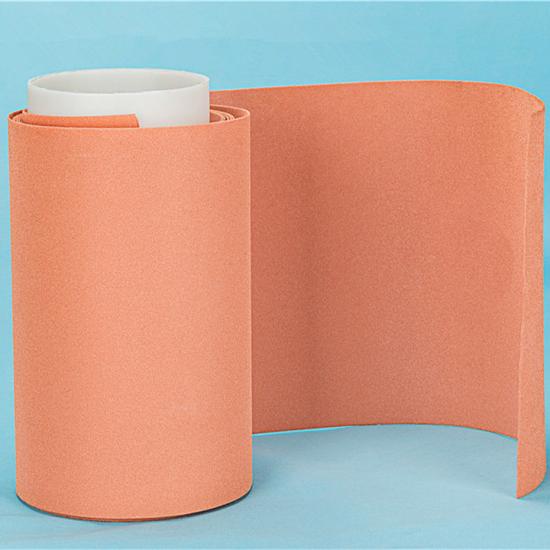
Copper Metal Foam Wholesale
Major Applications
Copper foam has become an essential material in numerous advanced industries due to its multifunctional properties.
Lithium-Ion Batteries
Copper foam serves as an excellent current collector and conductive substrate for lithium-ion batteries, particularly in silicon anodes and next-generation solid-state batteries. Its large surface area improves active material loading and enhances battery performance.
Fuel Cells
In hydrogen fuel cells, copper foam functions as a gas diffusion layer, catalyst support, or current collector, contributing to improved electrochemical efficiency.
Supercapacitors
The high specific surface area of copper foam provides an ideal substrate for electrode materials, significantly increasing capacitance and charge-discharge performance.
Heat Exchangers
Copper foam greatly enhances heat transfer efficiency, making it suitable for compact heat exchangers, electronic cooling systems, LED thermal management, and liquid cooling devices.
Catalysis
Chemical processing industries utilize copper foam as a catalyst support because its porous structure promotes efficient mass transfer and increases catalytic reaction rates.
Filtration Systems
Copper foam can filter liquids and gases while offering excellent corrosion resistance and long service life in demanding industrial environments.
Electromagnetic Shielding
Electronic equipment uses copper foam for electromagnetic interference (EMI) shielding due to its excellent electrical conductivity and lightweight construction.
Research and Development
Universities and research laboratories employ copper foam in nanotechnology, electrochemistry, hydrogen production, energy storage, and advanced materials research.
---
Advantages of Copper Foam
Compared with conventional copper sheets, wire mesh, or other porous materials, copper foam offers numerous advantages.
Large Specific Surface Area
The interconnected porous structure dramatically increases the available surface area, improving electrochemical reactions, catalytic activity, and heat exchange efficiency.
Excellent Conductivity
Copper foam combines high electrical and thermal conductivity with a lightweight structure, making it highly suitable for advanced energy applications.
Improved Energy Efficiency
In batteries and fuel cells, copper foam enhances electron transport and electrolyte diffusion, resulting in higher energy density and better overall device performance.
Lightweight Design
The high porosity reduces component weight while maintaining sufficient structural integrity, benefiting transportation, aerospace, and portable electronic devices.
Excellent Process Flexibility
Copper foam can be cut, formed, welded, coated, and integrated into various manufacturing processes with relative ease.
Long Service Life
Proper manufacturing and surface treatment provide reliable corrosion resistance and mechanical durability, reducing maintenance and replacement costs.
---
Future Development Trends
As global demand for clean energy and high-performance electronics continues to rise, copper foam is expected to play an increasingly important role in advanced manufacturing. Research efforts are focused on improving pore uniformity, increasing mechanical strength, and developing composite copper foams with enhanced corrosion resistance and multifunctional properties.
Emerging applications include solid-state batteries, sodium-ion batteries, hydrogen production through water electrolysis, carbon capture technologies, flexible electronics, and next-generation thermal management systems. Advances in additive manufacturing and nanotechnology are also enabling the production of highly customized copper foam structures with optimized performance for specific industrial applications.
---
Conclusion
Copper foam is a versatile and high-performance porous metallic material that combines exceptional electrical conductivity, outstanding thermal conductivity, high porosity, and excellent mechanical stability. Its unique three-dimensional architecture makes it an ideal solution for energy storage, thermal management, catalysis, filtration, and advanced electronic applications.
Manufactured using sophisticated processes such as electroplating, powder metallurgy, replication technology, and precision heat treatment, copper foam delivers reliable performance across a wide range of demanding industries. As innovations in renewable energy, electric vehicles, hydrogen technologies, and advanced electronics continue to accelerate, copper foam is expected to remain a key enabling material for next-generation engineering and sustainable industrial development.


 Online service
