Lith Corporation, founded in 1998 by a group of material science doctor from Tsinghua University, has now become the leading manufacturer of battery lab&production equipment. Lith Corporation have production factories in shenzhen and xiamen of China.This allows for the possibility of providing high quality and low-cost precision machines for lab&production equipment,including: roller press, film coater,mixer, high-temperature furnace, glove box,and complete set of equipment for research of rechargeable battery materials. Simple to operate, low cost and commitment to our customers is our priority.
Professional Introduction to Lab Coaters: Overview, Features, Processes, Applications, and Advantages
A lab coater is an essential piece of equipment used in research laboratories and pilot-scale production environments for producing uniform thin films and coatings on various substrates. As industries such as energy storage, electronics, nanomaterials, polymers, and functional membranes continue to expand, the demand for accurate, repeatable, and versatile coating systems has grown significantly. Lab coaters provide researchers with powerful tools to evaluate material formulations, optimize coating parameters, and simulate large-scale production processes on a smaller, controlled platform. This article outlines the fundamental overview, characteristics, coating processes, typical applications, and major advantages of modern lab coater systems.
Overview of Lab Coater Equipment
A lab coater is designed to deposit a controlled layer of liquid, paste, or slurry onto substrates such as metal foils, polymer films, glass plates, or ceramic sheets. Unlike industrial-scale coaters, lab coaters focus on precision, flexibility, and experimental parameter control, enabling researchers to conduct formulation studies, prototype fabrication, and quality evaluation in R&D settings.
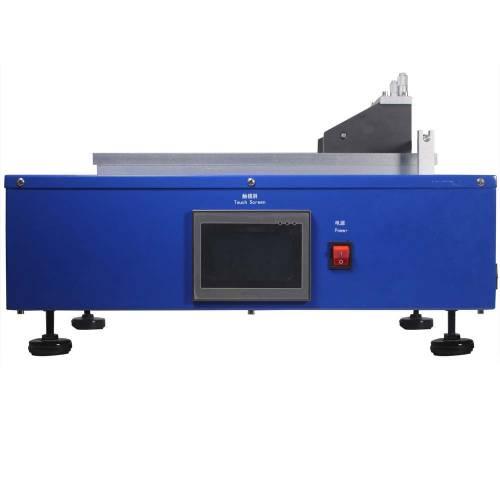
Lab coaters typically incorporate several key modules: a coating head or blade, a programmable motion stage, a substrate holder, and an optional heating or drying unit. Some advanced models integrate vacuum chucks, servo-controlled drives, temperature-controlled beds, and multi-mode coating heads to support a broader range of materials and film structures.
Key Features of Lab Coaters
1. High Precision Thickness Control
Lab coaters offer fine adjustment of coating thickness through micrometer-level blade height tuning, controlled feed speed, or calibrated gap settings. This precision is vital for applications such as battery electrodes, optoelectronic films, and functional coatings.
2. Multiple Coating Modes
Depending on the model, a lab coater may support doctor-blade coating, slot-die coating, spray coating, dip coating, or roll-to-roll coating. This versatility allows researchers to select the most suitable method for their material system.
3. Stable and Repeatable Motion
Equipped with linear guides and servo motors, modern lab coaters maintain consistent coating speed and uniform movement, minimizing optical defects, film irregularities, or thickness variations.
4. Advanced Digital Control Interface
Touchscreen control panels provide easy access to programmable recipes, speed settings, temperature profiles, and coating parameters. Stored programs ensure high repeatability across multiple tests.
5. Wide Substrate Compatibility
Lab coaters support rigid and flexible substrates, including Al foil, Cu foil, PET, PI, glass, ceramics, and stainless steel. This broad compatibility makes the equipment ideal for multi-disciplinary research.
6. Optional Heating, Drying & Vacuum Modules
Integrated heating beds accelerate solvent evaporation and stabilize film structure, while vacuum chucks secure substrates firmly during the coating process, ensuring flatness and improved uniformity.
Lab Coating Process
The coating workflow in a lab coater typically includes the following steps:
1. Material Preparation
The slurry or solution is mixed, dispersed, and degassed to achieve uniform viscosity and smooth flow properties. Proper formulation ensures defect-free coating results.
2. Substrate Placement
The substrate is placed onto the coating bed and secured either mechanically or via a vacuum chuck to eliminate wrinkles or shifting during the coating operation.
3. Parameter Setup
The operator programs coating speed, stroke length, blade height, temperature settings, and other relevant variables depending on the desired film characteristics.
4. Coating Execution
The coating head or substrate stage moves according to the set parameters, spreading the material evenly over the surface. The equipment maintains constant speed and pressure to ensure uniform film thickness.
5. Drying or Curing
After coating, the film undergoes drying, thermal curing, or UV curing depending on the application. For battery electrodes or ceramic films, additional processes such as calendaring or sintering may follow.
Doctor Blade Coater
Applications of Lab Coaters
1. Battery Electrode Research
Lab coaters are widely used in lithium-ion, sodium-ion, and solid-state battery development for coating cathode and anode slurries with precise thickness control.
2. Optoelectronic Devices
Coating of perovskite layers, OLED films, organic semiconductors, and quantum dot materials relies on lab coaters to ensure uniformity and repeatability.
3. Ceramic and Functional Films
Ceramic slurries, dielectric layers, piezoelectric films, and structural materials can be prototyped efficiently using controlled coating processes.
4. Polymer and Composite Membranes
Membrane researchers use lab coaters to produce separation membranes, filtration layers, and gas-barrier films with controlled porosity and thickness.
5. Conductive Inks and Printed Electronics
The equipment is ideal for depositing conductive pastes, sensor materials, and flexible electronic circuits onto polymer substrates.
6. Material Screening & Academic Research
Universities and government laboratories rely on lab coaters for experimental film testing, surface engineering projects, and nano-material development.
Advantages of Lab Coater Systems
1. High Accuracy & Repeatability
Digital control and precision mechanics ensure consistent film quality, essential for reliable experimental results.
2. Flexible Experimental Configuration
With multiple coating methods and adjustable parameters, researchers can easily optimize and compare different material formulations or process conditions.
3. Cost-Effective R&D Tool
Lab coaters simulate industrial coating behavior at a fraction of the cost, enabling rapid prototyping before scaling up to production lines.
4. Broad Material Compatibility
The equipment supports high-viscosity battery slurries, low-viscosity nanoparticle solutions, polymer melts, and more.
5. User-Friendly Operation
Simple setup, intuitive control interfaces, and easy maintenance make the equipment ideal for frequent laboratory use.


 Online service
