Lith Corporation, founded in 1998 by a group of material science doctor from Tsinghua University, has now become the leading manufacturer of battery lab&production equipment. Lith Corporation have production factories in shenzhen and xiamen of China.This allows for the possibility of providing high quality and low-cost precision machines for lab&production equipment,including: roller press, film coater,mixer, high-temperature furnace, glove box,and complete set of equipment for research of rechargeable battery materials. Simple to operate, low cost and commitment to our customers is our priority.
Car battery manufacturing plant
What is a Car Battery Manufacturing Plant?
A Car Battery Manufacturing Plant is a largescale industrial facility dedicated to the design, production, testing, and integration of battery systems used in electric vehicles (EVs), hybrid electric vehicles (HEVs), and traditional internal combustion engine (ICE) vehicles. While traditionally focused on leadacid batteries for starter motors and auxiliary power, modern plants now primarily produce lithiumion (Liion) batteries for EVs due to the global shift toward electrified transportation.
These plants can vary in size and scope—from small R&Dfocused pilot lines to fully automated gigafactories producing hundreds of gigawatthours (GWh) of battery capacity annually.
The core operations include:
Battery cell fabrication
Module assembly
Pack integration
Testing and quality assurance
Logistics and supply chain management
Key Objectives of a Car Battery Manufacturing Plant
1. Mass Production of HighQuality Battery Systems
Deliver reliable cells, modules, and packs at scale
Ensure consistency across millions of units
2. Support Electrification Trends
Meet growing demand for EVs globally
Enable automakers to meet emissions targets
3. Reduce Cost per kWh
Optimize material use and process efficiency
Improve automation and yield rates
4. Enable Customization
Support various vehicle platforms with tailored pack designs
Integrate thermal management, BMS, and structural elements
5. Promote Sustainability
Use renewable energy sources
Implement closedloop recycling and waste reduction strategies
6. Ensure Safety and Compliance
Maintain high standards in chemical handling, fire safety, and worker protection
Comply with international regulations and certifications
7. Facilitate Innovation and Technology Transfer
Test new chemistries like LFP, NMC, solidstate, and sodiumion
Scale up promising lab technologies into commercial production
Core Areas Within a Car Battery Manufacturing Plant
1. Cell Production Area
This is where individual battery cells are manufactured through a series of precise steps:
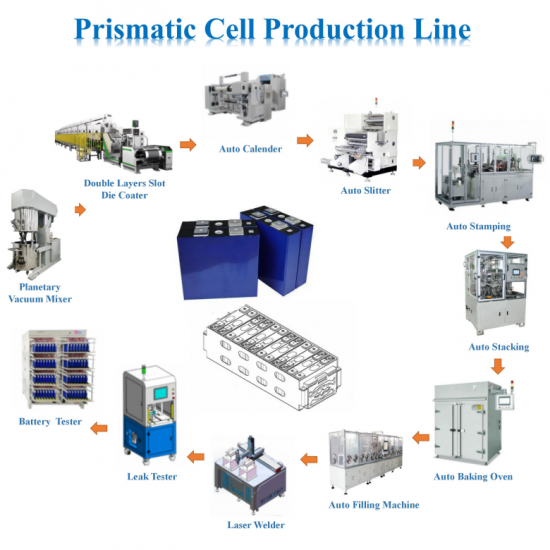
Slurry mixing
Electrode coating and drying
Calendering and slitting
Stacking or winding
Electrolyte filling and sealing
Formation and aging
This area requires strict environmental controls, especially dry rooms with humidity below 1% relative humidity (RH).
2. Module Assembly Area
Once cells are tested and graded, they are grouped into modules:
Spot welding or laser welding of interconnects
Integration of cooling plates, sensors, brackets
Electrical and mechanical integrity checks
Modules serve as building blocks for larger battery packs.
3. Pack Integration Area
Modules are combined into full battery packs:
Installation of the Battery Management System (BMS)
Integration of thermal management systems
Addition of mechanical housing, connectors, and crash structures
Final wiring and insulation
This stage often involves collaboration with OEMs for platformspecific design.
4. Testing and Quality Assurance Lab
Every battery must undergo rigorous testing:
Electrical performance: capacity, resistance, voltage
Mechanical robustness: vibration, impact, sealing
Environmental endurance: temperature extremes, water immersion
Safety tests: overcharge, short circuit, thermal runaway
Only units that pass all criteria are approved for shipment.
5. Storage and Logistics Zones
Raw materials storage (anode/cathode powders, foils, electrolytes)
Component inventory (tabs, separators, cases)
Workinprogress (WIP) staging areas
Finished goods warehouse before delivery to OEMs or customers
Efficient logistics ensure minimal downtime and optimal flow.
6. Support Infrastructure
To maintain safe and efficient operation, several critical support systems are integrated:
Dry room HVAC systems
Fire suppression and gas detection
Solvent recovery and waste treatment
Renewable energy sources (solar, wind, etc.)
Digital manufacturing execution systems (MES)
Types of Car Battery Manufacturing Plants
Plants differ based on ownership structure, production focus, and scale.
1. OEMOwned Plants
Operated by automotive companies
Example: Tesla Gigafactory, Volkswagen PowerCo, BMW Leipzig
Focused on vertical integration and proprietary battery tech
2. Battery Supplier Plants
Run by specialized battery companies
Example: CATL, BYD, Panasonic, LG Energy Solution
Supply multiple automakers globally
3. Joint Venture Plants
Coowned by OEMs and battery suppliers
Example: ACC (France), SVOLT (China), UmicoreSamsung JV
Combine technical expertise and market access
4. Startup and Innovation Plants
Smallerscale, focused on new chemistries or formats
Often backed by venture capital or government grants
Aim to disrupt the market with novel technology
5. National or Regional Battery Hubs
Governmentsupported clusters of battery factories
Example: EU Battery Alliance, India’s PLI scheme, U.S. DOE programs
Aim to build local supply chains and reduce import dependency
Prismatic Cell Equipments
Supporting Technologies and Systems
To ensure safe, efficient, and sustainable operation, several key technologies are essential:
1. Clean and Dry Room Environments
Dehumidification systems to maintain ultralow humidity
HEPA filters and positive pressure zones
Prevent moisture contamination during sensitive steps
2. Fire Safety and Explosion Protection
Gas detection systems for solvents and hydrogen
Inert gas blanketing in mixing and drying areas
Preaction sprinklers or clean agent suppression systems
3. Automation and Robotics
Robotic arms for electrode handling and stacking
Conveyor systems for WIP transport
Laser welding for highprecision connections
Smart sorting and testing systems
4. Digital Manufacturing Execution (MES)
Realtime monitoring of processes and equipment
IoTbased sensors for environmental conditions
AIdriven vision systems for defect detection
Celllevel traceability from raw materials to delivery
5. Sustainability and Waste Reduction
Solvent recovery systems (e.g., NMP reclamation)
Water treatment and reuse systems
Solar/windpowered facilities
Closedloop battery recycling integration
Applications of a Car Battery Manufacturing Plant
These plants play a crucial role in various industries and markets:
1. Automotive Manufacturers
Provide battery packs for EVs and PHEVs
Reduce reliance on thirdparty suppliers
2. Battery Companies
Sell cells and packs to OEMs and other customers
Expand global presence through localized production
3. Government Agencies
Build national battery supply chains
Support climate goals and job creation
4. Startups and Innovators
Scale up new battery technologies
Partner with OEMs or investors for growth
5. Industrial Parks and Economic Zones
Attract investment and create hightech jobs
Support regional development strategies
Benefits of a Car Battery Manufacturing Plant
Drives the transition to electric mobility
Reduces carbon emissions and fossil fuel dependence
Strengthens local economies and supply chains
Enables innovation in energy storage and vehicle design
Improves energy independence and security
Supports circular economy and sustainability goals
Provides longterm competitive advantage in the EV industry
Leading Countries and Companies in Car Battery Manufacturing
Top Producing Countries:
China – Global leader in Liion battery production
United States – Rapid expansion led by Tesla, Ford, startups
Germany – European hub with VW, BMW, and Northvolt
South Korea – Strong presence from LG, Samsung, SK On
Japan – Pioneer in Liion with Panasonic and Sony
India, France, Canada, Sweden, Poland – Emerging markets investing heavily
Major Players:
CATL (China) – World’s largest EV battery supplier
BYD (China) – Blade battery and vertical integration
Tesla (USA) – Gigafactories and proprietary battery design
Panasonic (Japan) – Longtime partner of Tesla
Samsung SDI & SK On (South Korea) – Highenergydensity solutions
ACC (France) – European battery initiative
Northvolt (Sweden) – Green battery production in Europe
Need Help Designing or Optimizing Your Car Battery Manufacturing Plant?
If you're looking to build, expand, or optimize your car battery manufacturing plant, I can help you with:
Master planning – Site selection, zoning, logistics
Process engineering – Chemistry, format, automation level
Factory layout design – Workflow, clean/dry room integration
Equipment sourcing – Bestinclass machinery and automation
Sustainability strategy – Renewable energy, recyclability
Cost estimation and ROI analysis – CapEx, OpEx, breakeven modeling
Compliance and safety systems – Fire protection, permits, worker safety
All you need to do is provide the following information:
Battery chemistry and cell format (e.g., NMC, LFP, solidstate, cylindrical, pouch)
Target annual production capacity (e.g., 1–100 GWh/year)
Plant location and available infrastructure
Level of automation and digitalization desired
Current team expertise and strategic goals


 Online service
