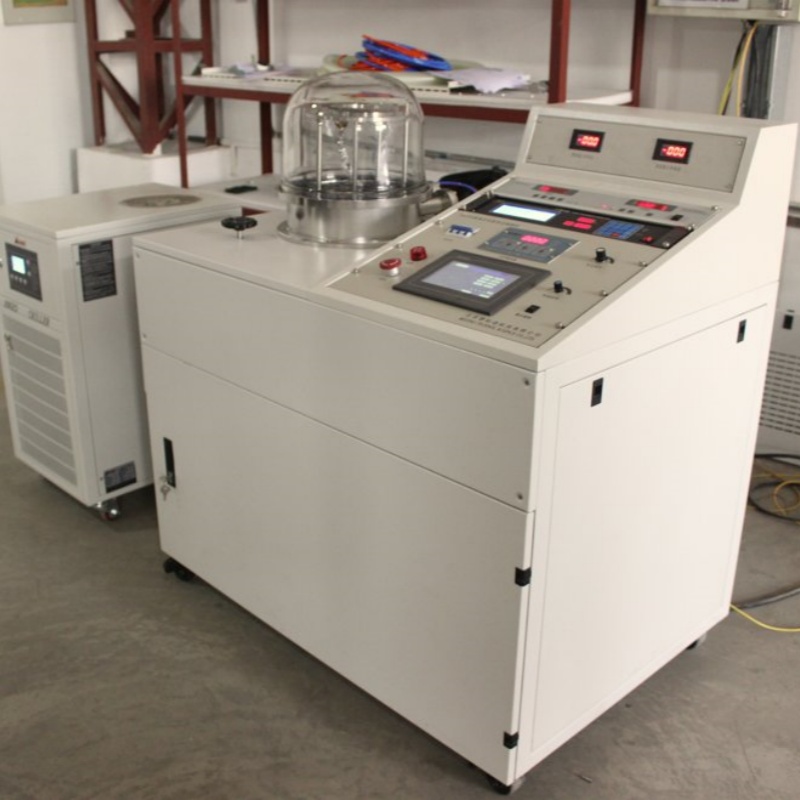
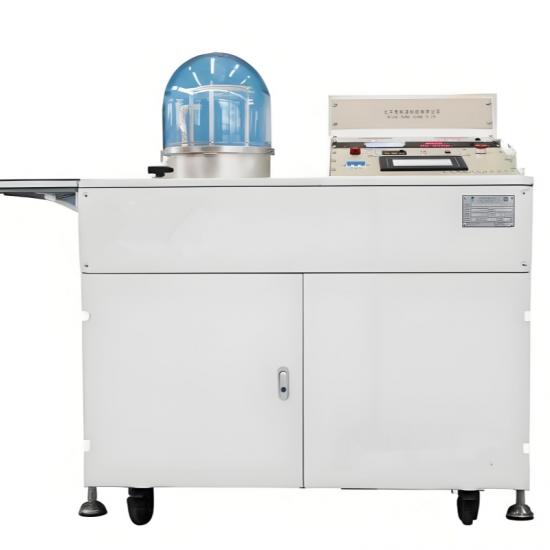
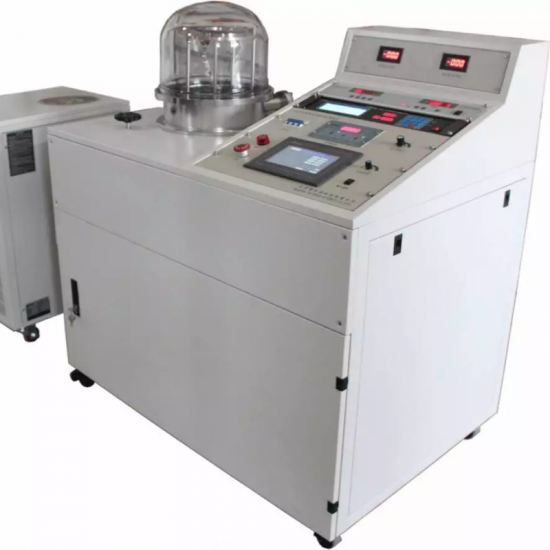
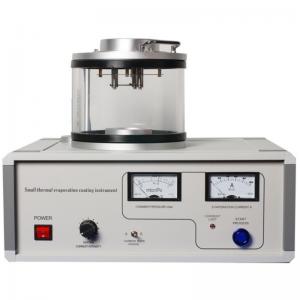
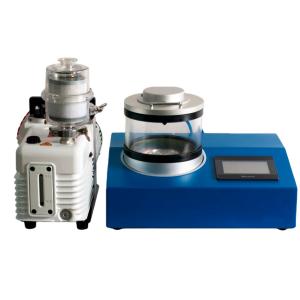
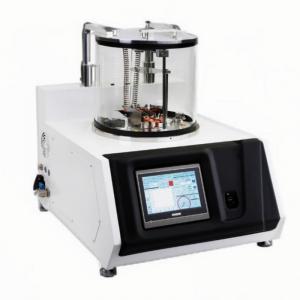
Dual-Source Vacuum Deposition Coating System Evaporation Coater For Metal/Organic Multilayer Thin Film
Lith-BY-ZD04-Dual-Source Vacuum Deposition
Technical Specifications
|
Parameter
|
Specification
|
|
Model
|
Lith-BY-ZD04
|
|
Coating Method
|
Multi-source metal evaporation
|
|
Vacuum Chamber
|
Glass bell jar + stainless steel base
|
|
Chamber Dimensions
|
Φ300mm × H360mm
|
|
Substrate Heating
|
Room temperature ~ 250°C
|
|
Substrate Size
|
Φ100mm
|
|
Film Uniformity
|
≤ ±5.0% (within Φ80mm area)
|
|
Evaporation Sources
|
2 independent metal sources
|
|
Control System
|
PLC + touchscreen interface
|
|
Footprint
|
L1100mm × W800mm (main unit)
|
|
Power Requirement
|
≥ 5kW
|
Key Features & Competitive Analysis
1. Compact & High Cost-Performance
· Compared to larger industrial systems, the offers a space-saving integrated design, making it ideal for labs with limited space.
· Lower operational costs due to efficient power usage and minimal maintenance needs.
2. Dual-Source Deposition Flexibility
· Many basic models offer only single-source evaporation, limiting material options. The ZHD300’s dual-source configuration enables:
o Co-evaporation: Producing alloy or doped films (e.g., metal-oxide composites).
o Sequential evaporation: Depositing multilayer structures (e.g., electrode/interlayer/active layers for solar cells).
· Superior to thermal evaporation-only systems, as it supports both organic and inorganic materials.
3. Precision & Reproducibility
· ±5% thickness uniformity outperforms many entry-level systems (typically ±8–10%), ensuring research-grade consistency.
· PLC-controlled deposition reduces human error vs. manual systems.
4. Glove-Box Compatibility
· Unlike conventional stand-alone coaters, the can be integrated with glove-box workflows, critical for:
o Air-sensitive materials (e.g., perovskites, OLED emitters).
o In-line encapsulation, reducing contamination risks.
Target Applications vs. Alternatives
|
Application
|
Advantage
|
Alternatives
|
|
R&D on Solar Cells
|
Dual-source for graded/stacked layers
|
Single-source systems lack compositional control
|
|
OLED/Thin-Film Research
|
Organic-Inorganic compatibility
|
Dedicated organic evaporators (higher cost)
|
|
Pilot Production Trials
|
High uniformity meets pre-production standards
|
Industrial systems (over-sized for labs)
|
Conclusion: Ideal for Innovators
The Lith-BY-ZD04 bridges the gap between basic lab tools and industrial coaters, offering:
✔ Research versatility – Thin-film exploration with multi-material capability.
✔ Process reliability – Repeatable results for scalable R&D.
✔ Future-ready design – Glove-box integration for next-gen optoelectronics.
Engineered for advanced materials science, where precision meets adaptability.



 Online service
